Thursday, May 12, 2016

More Princeton visit photos

Here are some of Elder Mumford's "takes" on our Princeton visit on May 9, 2016 --if I can get them to load! There were lots of great things to take photos of. May 9
Group photo inside the chapel at Princeton, NJ campus

 Princeton, New Jersey is about an hour from New York City via the train. (NJ Transit) We had the opportunity to tour the campus and learn more about the background of the University.  One of our highlights was spending a few hours with the Princeton Library Historical Documents Curator. Not only does the University own one of the largest collection of historical documents, but it also owns the largest collection of LDS historical documents outside of Salt Lake City, Utah. In advance of our trip, the library curator spent two or three days gathering up  LDS documents which normally are not on public display, but are kept in a sealed fault. When we arrived, a special viewing room had been set up specifically for our visit. The curator had  research the history of the church and the relevance of the documents to us. As he made his presentation he sounded like an LDS BYU professor. We not only saw historical originals of the Book of Mormon and many other documents, but we were able to turn the pages and hold the books. It was a real treat. Some of the artifacts were: first Book of Commandments, 1834  rare. First book of Mormon (quite a few copies); first Book of Brands, Brigham's copy (only 4-5 copies exist); migration pattern in stereo optics ; Route from Liverpool to Overland Trail illustration; first edition of Doctrine and Covenants included Lectures on Faith (taken out later), rare .


Page from 100 year Brand Book

Letter from Brigham Young to one of his wives


Page in the 100 year Brand Book--in which we found some "familiar" names dear to our family,


The display of items from Princeton Library "special collections--Mormon items"


There was an Ice Cream shoppe with this mirror from the original amusement park of the 1960's called Palisades Park ( made famous in a song of that era.)

Inside entrance to The Library


Beautiful yards  And more bougenvillia if Pres Bench is right


Elder Mumford in front of Albert Einstein's house.


A more "expensive" curb and gutter


Tunnel filmed in movie "A Beautiful Mind"

Battle of Princeton marker 

Entrance to Nassau Hall 


More interesting brand information--see John Neff mid page 


Check out John Neff's brand close to bottom of page 

Monument honoring George Washington 

Another Missionary outing--to Princeton, New Jersey


ceton University has a beautiful, sprawling camp 

Pres Woodrow Wilson statement and display--He was a former University President--but not very "revered" by many there


Yellow house where Washington stayed. This is along the Nassau Street where Washington troops marched. The sycamore tree and another next to it are over 250 years old. 


Located on the sidewalk


Being an "ex-librarian" this "Little Free Library" perched on the sidewalk amused me and caught my eye. So appropriate for such a stellar university neighborhood


Just love this "Bavarian-style" architecture 


A Tribute  to Albert Einstein--resident and Professor at Princeton

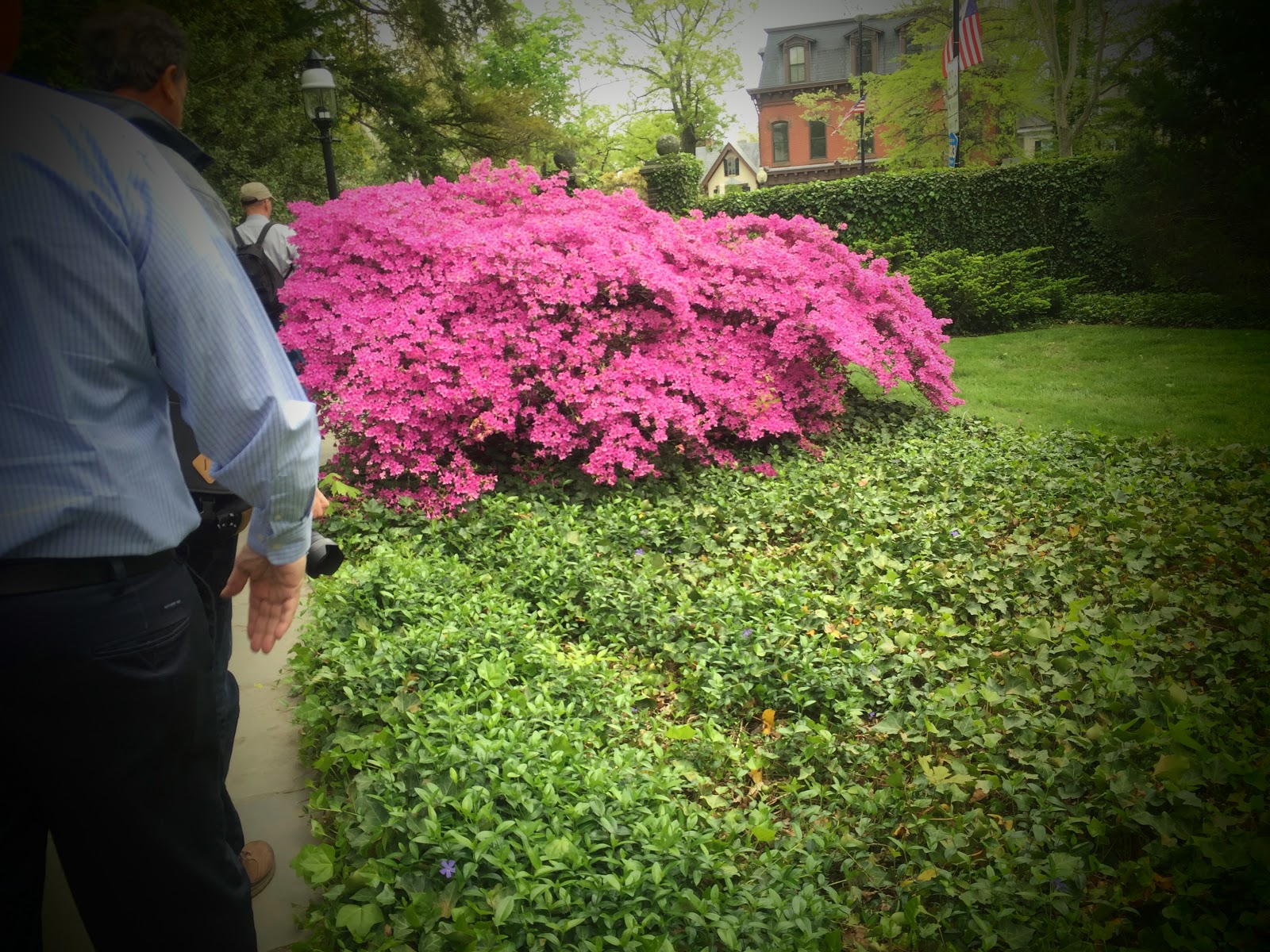
Flowers like this were found in many yards around the campus. I think Pres Bench called it bougenvillia?


Ivy grows EVERYWHERE in this Ivy League college


More lovely campus buildings 


Inside the Campus Chapel--such beautiful Windows and a majestic pipe organ ( it was on auto--play while we were there) 


The "Heart" of campus 


This ivy-covered building is typical of these old Ivy League campuses--so beautiful


Riding the Train to Princeton, NJ 

Early ( especially for P-Day---8:00 am) on Monday morning, May 9, 2016--found 5 Missionary couples, the single sisters and Public Affairs, Family History and CES Missionary couples plus
Presidents Bennion and Bench riding the 1 Subway train to Penn Station to catch the train to Princeton Junction and then on a shuttle that would take us the campus of one of the oldest Universities in the nation--PRINCETON.

Chartered in 1746, Princeton University is one of the oldest colleges in the country. Nassau Hall, first among the 
historic buildings that adorn Princeton’s 500-acre campus in Princeton, NJ, served as the nation’s capitol building in 1783. Undergraduates may select from 36 academic departments. Nine current faculty members are Nobel Prize recipients. The university’s generous financial aid program provides grants and campus jobs in place of student loans. Sixty percent of freshmen receive grants from the school averaging more than $34,000. Admitted students can defer their enrollment for a year to participate in community service work abroad through the Bridge Year 
program. On-campus housing is guaranteed for all four years for undergraduates. Princetonians can take part in groundbreaking research projects or get involved in one of 300-plus student organizations on campus. Princeton’s 10-library system is home to over 7 million books, 6 million microfilms and a collection of rare books, prints and archives. The Princeton University Art Museum contains more than 92,000 works. The school’s varsity athletic teams, nicknamed the Tigers, compete in the Ivy League (NCAA Division I). Princeton has produced a large 
number of luminaries, including U.S. presidents James Madison and Woodrow Wilson, First Lady Michelle Obama, Google Executive Chairman Eric Schmidt and HP CEO Meg Whitman. FORBES Editor-in-Chief Steve Forbes graduated from Princeton in 1970. 


50At a Glance

Student Population: 8,014
Undergraduate Population: 5,323
Student to Faculty Ratioa6
Total Annual Costc$58,965
In-State Tuitionc$41,820
Out-of-State Tuitionc$41,820
Percent on Financial Aidd60%
Average Grant Aid Received (FT/First-Time): $32,717
Percent Admittede7%
SAT Composite Rangef1410-1600
ACT Composite Rangef31-35

Forbes Lists
#7 in Private Colleges
#13 in Research Universities
#3 in the region


This outing was announced as a "Walking walking day" and we were all alerted to wear "good walking shoes". 
WELL--it lived up to that!! My Fitbit registered over 9,000 steps by journey's end. But it was a beautiful day and we had a great time!!
We learned so much from our visit to the new library--currently under construction--and it's Rare books and collection Directors who showed us things in their "Mormon" collection. It was so very interesting to see and "touch" things like First edition copies of the Book of Mormon, an amazing "Book of Brands" a record of all the recorded animal brands in a 100 year period in  
the Salt Lake Vallley and beyond in a certain span of year; pictures of the early history of the Salt Lake Valley; and other interesting early publications of the Church. These 2 men really loved their jobs and you could tell it!! It was delightful!! Wished we could have stayed longer--I just barely "scratched" the surface of what was on display for us. 
Princeton is the fourth oldest university in America, and considered to be one of the finest universities in the world. Princeto has a $23 billion dollar endowment, which on a per student basis, is the largest university endowment in the world. (About $8 million per student.) There are only 8 thousand students with a university staff of over 2 thousand. As a result of this massive funding, Princeton University has a beautiful, sprawling campus. 


We left the "Special Collections room" and went out on Campus to find a place for lunch. We went with the Grimley's, the Grubers and Sister Dunlop ( who are Temple workers/volunteers) at a relatively
 new eatery called 30 BURGERS (Elder Mumford said I didn't want to put that down--but hey, maybe it will 
become famous😬.) Then WE met back at Nassau Hall for our "Walking Tour"-- which it turns out was more than 
maybe some of us realized  it would be. We went on a tour of Princeton village-- more than just the Campus. But the houses and areas we saw were very interesting!! Such a collection of architecture!!

At about the arch location (top-center of this Princeton building), Washington's troops fired a canon ball at what is now the Nassau Building - firing on it's own building that had been taken over by Hessian troops. The ball flew thru a window, struck a picture King George, who lost his head. The revolutionaries were so excited at seeing this they overran the Hessian soldiers which lead to this battle of Princeton victory. A picture of Washington is now displayed in the frame at Princeton. 


Tuesday, May 10, 2016

American Folklore Museum--located next door to the NY Manhattan Temple

On Monday, May 2, 2016--we got a call from the Public Affairs Missionaries--Mark and Susan Dransfield--about an event at the American Folklore Museum which is right next
door to the New York Manhattan Temple. This museum has a private collection of FreeMason and Odd Fellows artifacts on display and invited anyone interested to come to a tour of this exhibit on Thursday, May 5th. So after our Temple shift--Elder Mumford and I stopped in. The reason the Museum had contacted the Dransfields comes in part from the documented history that mentions that Josephh Smith was a Freemason. The Guide was quiteknowledgeable and was surprised at the group of about 20-25 people ('mostly those the  Dransfields had lined up) but it was one of the largest groups to "tour" the Museum. Here is just a few interesting things she shared and from on-line. Due to the "transfer of material from one source to another" there may be some repeats or mixing of the entities--the author of this particular Post can only say "hope you know, I had a HARD DAY"😏😩!!"
]What was the largest fraternal organization during the so-called “Golden Age of Fraternalism” (1870-1910)?  You may be surprised to know it was not Freemasonry but the Odd Fellows. In 1890 Freemasonry had 609,000 brothers while the Odd Fellows had over 672,000. You may also be surprised to know the Scottish Rite Masonic National Heritage Museum probably holds the largest public 
collection of Odd Fellows artifacts, and materials in the county; some 700 items. Just as many men joined both the Craft and the Odd Fellows, so our museum collections both Masonic and other American fraternal history. Indeed the relationship between the Freemasonry and Odd Fellowship was quite similar and often truly fraternal.
            As with Freemasonry, the Odd Fellows is a British institution. They began in England in the late 1700s as a “friendly society” for working class men and artisans. Meeting in taverns to socialize they also
pooled their resources to help each other in times of need and for burial fees. That such an “odd” assortment of men would organize for such benevolent purposes was considered “odd” for the times and thus the name.

They call Odd Fellows a "poor man's fraternity
In 1929, Deputy Grand Sire Logan delivered a speech: "Its membership, including membership of its sister fraternity of Odd Fellows, is more than five millions...It has been said that Odd Fellowship is a poor man's fraternity. If those making the suggestion mean that it makes no distinction between the rich and the poor, they are correct, but if they mean it is poor in money or otherwise, they lack information. Its assets are greater than the combined assets of all other purely fraternal societies. In 
the last five decades, it has collected and expended more than twenty-five million dollars, the greater part of which went towards relieving the distress incident to the human race.


Now--another group who have been " misunderstood and misaligned--It's the world's most well-known secret society. Rich with symbols and ritual, it's the source of legends . . . parodies . . . and conspiracy theories.
ALL ABOUT FREEMASONRY - for Non-Freemasons

Freemasonry is an esoteric society only in that certain aspects are private; Freemasons state that Masonry is not, in the 21st century, a secret society but a "society with secrets". Some Freemasons describe Freemasonry as a "confidential" society in contrast to a secret society. Most modern Freemasons regard the traditional concern over secrecy as a demonstration of their ability to keep a promise and a concern over the privacy of their own affairs. Lodge meetings, like meetings of many other social and professional associations, are private occasions open only to members. The private aspects of modern Freemasonry deal with the modes of recognition amongst members and elements within the ritual. In reality, Freemasons are proud of their true heritage and happy to share it, offering spokesmen, briefings for the media, and providing talks to interested groups upon request. On this site curious non-masons can find out the real secret lives of the Freemasons as far as what are the secrets of Freemasons.

Sister Mumford in front of American Folklore Museum

Walking in darkness . . . Towards the light
The above saying is like the "motto" of the Masons


FreeMason apron


Quilt with Freemason symbols

More symbols--of I. O. O. F. 

Odd Fellows costume--displaying symbol of 3 links 


This symbol of FreeMasons dates back to George Washington 


Welcome to the world of Freemasonry. What  is Freemasonry? Simply put, it's the world's oldest and largest fraternity. Its membership is a Who's Who of world history -- George Washington, Benjamin Franklin, Winston Churchill, Mozart, 
Davy Crockett, Franklin Roosevelt, Harry Houdini, Gerald Ford, Henry Ford, John Wayne, even Colonel Sanders.
This group started as a group of stone Mason's and cutters-- with the "compass
and the square--2 important tools to their trade--as their symbols. For meetings
Masons dress up in their Sunday bests and -- just like the original stonecutters --
wear aprons.  The center of any lodge room is an altar. Many things are
done around this altar. All the activities of the lodge take place about the altar.
There are certain subjects which are prevented from discussing within the Lodge.
And religion is one.  Politics is another.            Although heavily influenced by Freemasonry’s rituals, symbols and tenets, a large measure of the Odd Fellows’ success came from its dedication to serve its members. Its three secret ritual initiations 
taught the “three links” of fraternity as “Friendship, Love and Truth” and commanded its brothers to “Visit the Sick, Relieve the Distressed, Bury the Dead, Care for the Widow, and Educate the Orphan.”  In the forty years between the founding of Wildey’s first 
American lodge and his death in 1861, Odd Fellow’s paid out nearly $9,000,000 in relief. After the Civil War State grand Lodges began building homes for widows and orphans. With the first opening in Meadville, PA in 1872 by 1927 there were 62 home in the United States. Between 1830 and 1936 the fraternity had paid out over $247 million in relief.

And then there are the ceremonies. Each one teaches a moral lesson related to the legend of one Hiram Abiff, the architect of King Solomon's Temple.

It was an interesting display--glad we could show our support to our Public Affairs Missionaries. They work extremely hard!